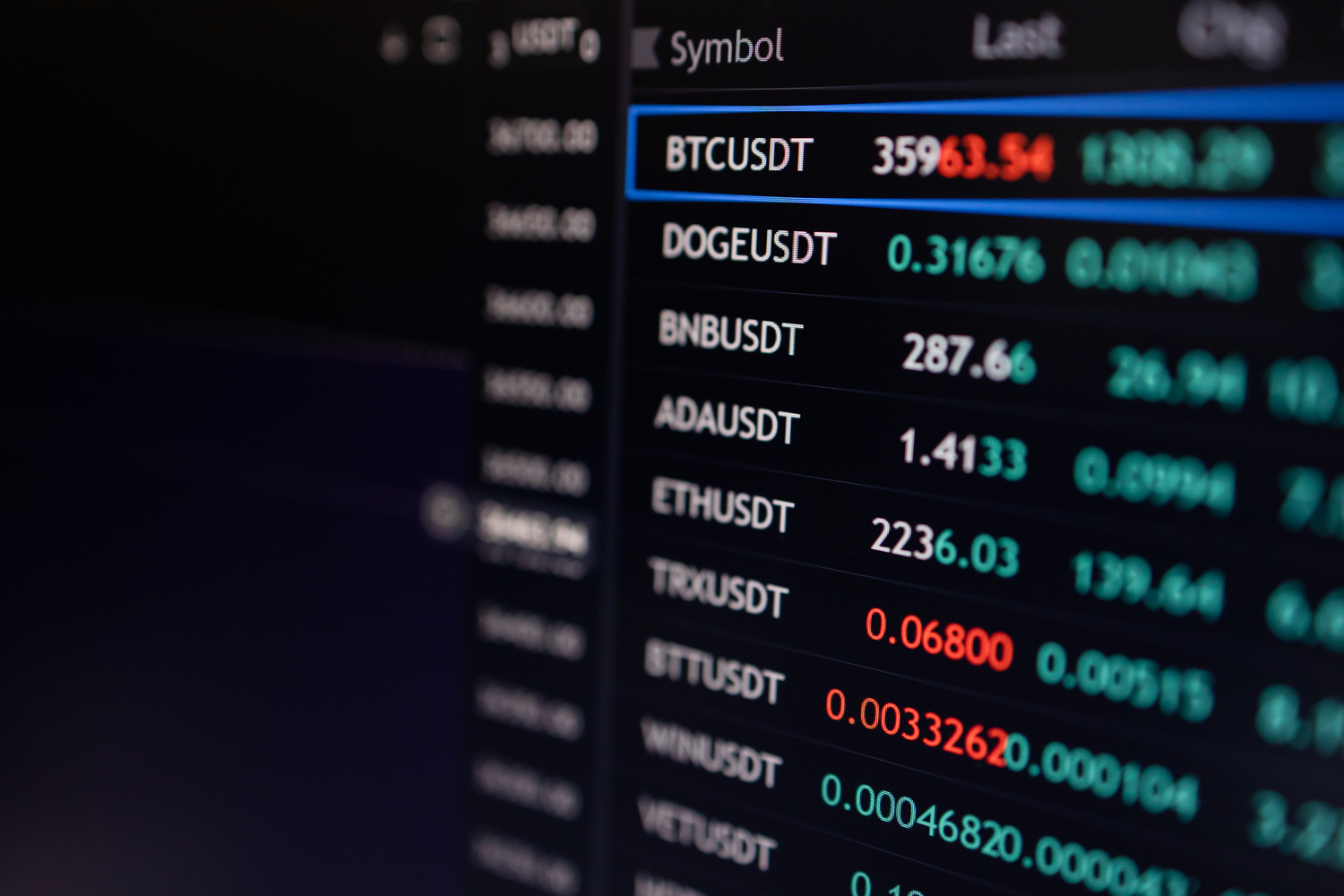
Every time you open a position, close a trade, or swap one coin for another, you pay a crypto exchanges fee. On a single order it is a rounding error. Over a year of active trading it becomes one of the largest and quietest expenses in your portfolio — and a big slice of it never stays with the exchange at all. It is paid straight out to whoever referred you.
ReferenceFee exists for one reason: to send that slice back to you, every morning, in USDT, into the same wallet you trade from. This guide explains what a crypto exchanges fee really is, where the money actually goes, and how much a daily rebate on it is worth in hard numbers.
What This Guide Covers
- What a crypto exchanges fee really is
- Where your fee money actually ends up
- What the major venues charge in 2026
- 7 ways ReferenceFee puts the commission back in your wallet
- How it works: four steps, about two minutes
- The rebate math, written out
- Who benefits most
- Frequently asked questions
What Is a Crypto Exchanges Fee, Really?
A crypto exchanges fee is the commission a platform charges for matching your order with someone else’s. Almost every venue splits it into two rates:
- Maker fee — charged when your limit order rests on the book and adds liquidity. Usually the cheaper side.
- Taker fee — charged when your order fills instantly against existing liquidity. Usually the more expensive side, and the one most retail traders actually pay.
On top of the headline rate sit costs that behave exactly like a fee even when nobody labels them one: the bid-ask spread, funding payments on perpetual futures, withdrawal charges, and conversion costs on stablecoin pairs. When traders compare venues they normally look only at the taker number. That is why the true crypto exchanges fee you pay is almost always higher than the figure printed on the pricing page.
| Cost type | Typical spot range | Typical futures range | Do you notice it? |
|---|---|---|---|
| Maker | 0.00% – 0.10% | 0.010% – 0.02% | Rarely |
| Taker | 0.05% – 0.10% | 0.04% – 0.06% | Sometimes |
| Spread | Varies by pair | Varies by pair | Almost never |
| Funding | — | Every 8 hours | Almost never |
| Withdrawal | Flat per network | Flat per network | Yes |
Where Your Crypto Exchanges Fee Actually Goes
Here is the part most traders never see. Exchanges spend surprisingly little on classic advertising. They spend on referrals. Every major platform runs an affiliate programme that pays partners a percentage of the trading commission generated by the users they bring in.
The mechanics are simple:
- An influencer, a Telegram channel, or a YouTube reviewer posts a sign-up link.
- You register through that link. Your account is permanently tagged to their partner ID.
- You trade. Every crypto exchanges fee you pay is recorded against that tag.
- The exchange keeps part of the commission and pays the partner a revenue share — commonly 20% to 50%, and higher for large partners.
- That payout continues for as long as your account stays active. It is not a one-off bounty.
None of this is hidden or improper. Affiliate terms are published openly by the venues themselves, and you can read the rate structure directly in a public exchange fee schedule. The problem is one of distribution. You generated the volume. You paid the crypto exchanges fee. Someone who posted a link once collects a cut of it every single month, indefinitely.
What a Crypto Exchanges Fee Costs on the Major Venues
Rates cluster tightly. Nobody is dramatically cheaper than anybody else, which is exactly why switching venues to chase half a basis point is not a strategy:
- Bybit — 0.055% futures taker. Full breakdown in our Bybit fee rates guide.
- Bitget — 0.06% futures taker, covered in Bitget trading fees and the 0.06% taker cost.
- MEXC — see the MEXC fee guide and cashback walkthrough.
- Leverage on any venue — notional size multiplies the bill, explained in the hidden cost of leverage trading fees.
Recovering half of whatever you already pay beats hunting for a marginally cheaper crypto exchanges fee somewhere else.
7 Ways ReferenceFee Puts Your Crypto Exchanges Fee Back in Your Wallet
ReferenceFee is registered as a partner with the exchanges, exactly like any influencer. The difference is what happens after the commission lands. Instead of keeping it, ReferenceFee returns the bulk of it to the trader who generated it.
1. It rebates the referral commission straight back to you
The core service. The share of your crypto exchanges fee that the platform pays out for referrals — up to 50% — is credited to you instead of disappearing into a stranger’s wallet.
2. It pays daily, into your exchange spot wallet
Not a balance on our site that you have to request and wait for. The USDT arrives each morning in the wallet you already trade from, so by the time you look at it, it is margin, dry powder, or a position.
3. There is no minimum and nothing to claim
Most rebate services hold your money until you reach roughly 20 USDT and then make you file a payout request. There is no threshold here, no request, and no waiting period. You do nothing.
4. It works on volume you were going to trade anyway
No strategy change required. Same venue, same pairs, same risk rules. The rebate applies to the crypto exchanges fee your normal activity already produces.
5. It stacks on top of the exchange’s own discounts
Native VIP tiers, native token discounts, and promotional rates all still apply. The rebate sits on top of whatever discounted rate you already qualify for, so your effective cost can drop from 0.05% to roughly 0.03%.
6. It covers eight exchanges from one account
If you split volume across venues you would otherwise have to negotiate separate partner deals for each. One account consolidates the rebate on your total crypto exchanges fee across every supported platform.
7. It never asks for keys, cards, or documents
No API keys, no passwords, no card, no deposit, no identity papers. A UID is a plain account number — it cannot move funds. There is nothing here to fund and nothing to lose custody of.
How It Works: Four Steps, About Two Minutes
- Create your ReferenceFee account. An email address and a password. Nothing else.
- Open the exchange through your link. Pick a venue in the app and register through the link it gives you. That link tells the exchange the commission belongs to your account. A few exchanges also allow linking an existing account — the app tells you which, before you start.
- Copy your UID. The exchange shows a user ID on your profile or account page. Copy it.
- Paste it in, then forget about it. Setup is finished. Trade exactly as before; the rebate arrives on its own.
One thing worth knowing: the rebate only applies from the day your UID is linked. Every crypto exchanges fee you pay before that is closed business — it goes to the exchange and to somebody else’s affiliate account, and it cannot be recovered retroactively.
Crypto Exchanges Fee Rebate Math: What It Is Actually Worth
Percentages stay abstract until you attach them to volume. Assume a 0.05% blended taker rate on futures and a 40% rebate:
| Monthly volume | Fees paid @ 0.05% | Rebate @ 40% | Back to you per year |
|---|---|---|---|
| $50,000 | $25 | $10 | $120 |
| $250,000 | $125 | $50 | $600 |
| $1,000,000 | $500 | $200 | $2,400 |
| $5,000,000 | $2,500 | $1,000 | $12,000 |
A leveraged futures trader who turns over their balance a few times a week reaches seven-figure monthly volume far faster than they expect. At $5,000,000 a month that table works out to roughly $33 a day landing in your spot wallet — which is also, precisely, what you hand over every day while your UID stays unlinked.
Who Benefits Most From a Crypto Exchanges Fee Rebate
- Scalpers and high-frequency traders — fees are the single largest drag on any strategy with a thin edge per trade.
- Futures traders using leverage — notional volume is a multiple of deposited capital, so the crypto exchanges fee compounds fastest here.
- Bot and grid traders — automated systems place enormous order counts and pay on every fill.
- Arbitrage desks — spreads are narrow enough that a rebate can decide whether a strategy is viable at all.
- Long-term holders — the smallest benefit, since few trades means few fees, but still non-zero on entry and exit.
Frequently Asked Questions About the Crypto Exchanges Fee
Does using ReferenceFee increase my crypto exchanges fee?
No. The exchange charges its published rate regardless of how you signed up. The referral share is carved out of what the platform already collects, never added on top.
Can I link an exchange account I already have?
On some venues, yes. Most attach the partner tag at registration, in which case the standard route is a fresh account through the link. The app tells you which exchanges allow linking an existing UID before you start.
Is this the same thing an influencer offers?
The mechanism is identical. The outcome is not. An influencer keeps the commission generated by your crypto exchanges fee; ReferenceFee returns the bulk of it to you, daily.
Does ReferenceFee need API keys or access to my funds?
No. Attributing referral volume requires only a UID, which is a plain account number with no permissions attached. Never grant withdrawal rights to any third-party service, here or anywhere else.
When does the rebate arrive?
Every day, automatically, in USDT, in your exchange spot wallet. There is no minimum to reach and no payout to request.
What happens if I stop trading?
Nothing is owed in either direction. No volume means no crypto exchanges fee, and no fee means no rebate.
The Bottom Line
The referral commission built into every crypto exchanges fee is going to be paid to somebody. That has been true since the first affiliate programme launched, and it stays true whether or not you pay attention to it. The only open question is whose wallet it lands in.
ReferenceFee answers that question in your favour. Same exchange, same rates, same trading — with the commission redirected each morning to the person who actually generated it. Since July 2024 that has come to more than $260,000 returned to over 2,100 traders, without a single missed day.
Trading digital assets carries substantial risk. A fee rebate lowers your cost base; it does not lower market risk or guarantee profitability.
What does this cost you?
Put your own monthly volume into the calculator and see the annual figure for your exchange and tier.
Run the numbers